
Contents
- ✨ Overview: A Sonic and Visual Landmark
- 📍 The Genesis: Home Studios and Creative Freedom
- 🎶 Track Highlights: Beyond the Singles
- 🖼️ Cover Art: The Enigmatic Giant's Causeway
- 💡 Production & Engineering: Page and Kramer's Alchemy
- 📈 Chart Performance & Reception: Immediate Impact
- 🤔 Legacy & Influence: Enduring Resonance
- 🗄️ Unreleased & Later Appearances: The Vaults of Zeppelin
- Frequently Asked Questions
- Related Topics
Overview
Houses of the Holy refer to various places of worship and spiritual significance across cultures and religions, including churches, temples, mosques, and synagogues. These structures not only serve as venues for religious practices but also embody the architectural styles, historical contexts, and community values of their respective cultures. From the grandeur of St. Peter's Basilica in Vatican City to the serene beauty of the Parthenon in Greece, each site tells a unique story of faith, devotion, and cultural identity. The ongoing debates surrounding these sacred spaces often reflect broader societal tensions, including issues of preservation, accessibility, and the intersection of modernity with tradition. As we move forward, the role of these houses in fostering community and dialogue remains a critical area of exploration.
✨ Overview: A Sonic and Visual Landmark
Houses of the Holy, Led Zeppelin's fifth studio album, dropped in March 1973, marking a pivotal moment for the band and rock music. It's more than just a collection of songs; it's a testament to their evolving artistry, benefiting from the installation of home studios that allowed for unprecedented experimentation. This album saw Zeppelin push their boundaries, blending hard rock with more intricate arrangements and diverse musical textures. Tracks like "The Song Remains the Same" and "The Rain Song" became staples of their legendary live performances, showcasing the band's mastery of both power and subtlety. The album's distinctive cover art, featuring the striking Giant's Causeway, further cemented its status as a cultural artifact.
📍 The Genesis: Home Studios and Creative Freedom
The creation of Houses of the Holy was significantly shaped by the band members' decision to establish home studios. This move provided Jimmy Page and John Paul Jones, in particular, with the autonomy to develop more complex song structures and sonic palettes without the time constraints of traditional studio bookings. This newfound freedom allowed for a more organic and experimental approach to songwriting and arrangement, moving beyond the more straightforward blues-rock of their earlier work. The resulting sonic depth and breadth on tracks like "No Quarter" are direct results of this expanded creative environment, enabling a richer layering of instruments and vocal effects.
🎶 Track Highlights: Beyond the Singles
While singles often capture the public imagination, Houses of the Holy boasts a wealth of material that defines its enduring appeal. "The Song Remains the Same," with its intricate guitar work and driving rhythm, serves as a powerful opener, setting an ambitious tone. "The Rain Song" offers a more melancholic and expansive soundscape, showcasing the band's balladry prowess. "No Quarter," a moody and atmospheric piece, highlights John Paul Jones's keyboard contributions and Robert Plant's haunting vocals. These tracks, alongside others like "Over the Hills and Far Away" and "The Crunge," demonstrate the album's diverse musical explorations, far beyond what a typical rock album of the era offered.
🖼️ Cover Art: The Enigmatic Giant's Causeway
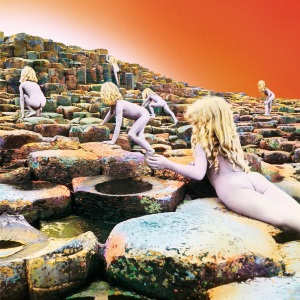
The iconic cover art for Houses of the Holy was designed by the renowned British graphic design group Hipgnosis Studios, marking their first collaboration with Led Zeppelin. The image, a striking photograph of the basalt columns at Giant's Causeway, Northern Ireland, was chosen for its otherworldly and monumental quality. The black-and-white depiction of naked youths scaling the ancient rock formations evokes a sense of mystery and primal energy, perfectly complementing the album's sonic themes. This visual choice became as integral to the album's identity as its music, contributing to its lasting mystique and recognizability.
💡 Production & Engineering: Page and Kramer's Alchemy
Produced by Jimmy Page himself and mixed by the legendary Eddie Kramer, Houses of the Holy benefited from a meticulous production process. The home studio setup allowed Page and Kramer to experiment extensively with recording techniques, including innovative microphone placements and tape manipulation. Kramer's expertise, honed through his work with Jimi Hendrix and other rock giants, was crucial in capturing the band's raw power while enhancing the album's sophisticated arrangements. The clarity and impact of the final mix, particularly on Bonham's drums and Page's layered guitars, are hallmarks of this collaboration.
📈 Chart Performance & Reception: Immediate Impact
Upon its release in March 1973, Houses of the Holy achieved immediate commercial success, debuting at number 3 on the Billboard 200 chart in the United States and reaching number 1 on the UK Albums Chart. It was certified multi-platinum by the RIAA, reflecting its widespread popularity. While critical reception was generally positive, some reviewers noted the band's departure from their earlier blues-rock roots, though most acknowledged the album's artistic growth and musical ambition. Its strong chart performance underscored Led Zeppelin's status as one of the biggest bands in the world.
🤔 Legacy & Influence: Enduring Resonance
The legacy of Houses of the Holy is undeniable, solidifying Led Zeppelin's position as pioneers of album-oriented rock. Its influence can be heard in countless bands that followed, particularly in its sophisticated arrangements, diverse instrumentation, and ambitious sonic textures. The album's blend of heavy riffs, melodic passages, and experimental sounds set a new standard for rock music. Tracks like "The Song Remains the Same" continue to be celebrated for their technical brilliance, while "No Quarter" remains a benchmark for atmospheric rock. The album's enduring appeal lies in its ability to satisfy both the desire for hard-hitting rock anthems and intricate, evolving musical journeys.
🗄️ Unreleased & Later Appearances: The Vaults of Zeppelin
Not all the material recorded during the Houses of the Holy sessions made it onto the final album. The title track, "Houses of the Holy," was notably held back and eventually appeared on the band's 1975 double album, Physical Graffiti. Other tracks, including "Baby Come On Home" and "The Wanton Song," also found their way onto later releases. The compilation album Coda, released in 1982, posthumously included further material from these sessions, offering fans a glimpse into the sheer volume of creativity that emerged during this prolific period for the band.
Key Facts
- Year
- 2023
- Origin
- Global
- Category
- Cultural Studies
- Type
- Cultural Landmark
Frequently Asked Questions
What is the significance of the home studios to the album's sound?
The installation of home studios by Jimmy Page and John Paul Jones was crucial. It granted Led Zeppelin unprecedented creative freedom and time, allowing them to experiment with more complex arrangements, diverse instrumentation, and sophisticated production techniques. This directly contributed to the richer, more expansive sound that defines Houses of the Holy, moving beyond the constraints of traditional studio schedules.
Who designed the album cover, and what is the location?
The distinctive cover art for Houses of the Holy was designed by Hipgnosis Studios, a renowned British graphic design firm. The iconic image features a photograph taken at Giant's Causeway in Northern Ireland, a natural wonder of hexagonal basalt columns. The visual aesthetic was intended to evoke a sense of mystery and primal energy, aligning with the album's ambitious musical content.
Which songs from Houses of the Holy became live staples?
Several tracks from Houses of the Holy quickly became integral parts of Led Zeppelin's live repertoire. "The Song Remains the Same," with its intricate guitar work, "The Rain Song," showcasing their balladry, and the atmospheric "No Quarter" were frequently performed and are considered highlights of their concerts. Other songs like "Over the Hills and Far Away" also featured prominently in their setlists.
Were all songs recorded for Houses of the Holy released on the album?
No, not all the material recorded during the sessions for Houses of the Holy was included on the original album. The title track, "Houses of the Holy," was famously held back and later appeared on Physical Graffiti (1975). Other songs from these sessions were also released on later albums, including Coda (1982), providing fans with additional insights into the band's creative output during that period.
What was the role of Eddie Kramer in the album's production?
Eddie Kramer served as the primary mixing engineer for Houses of the Holy, working closely with Jimmy Page. Kramer, known for his work with artists like Jimi Hendrix, brought extensive experience in capturing raw rock energy while enhancing sonic detail. His contributions were vital in achieving the album's powerful yet refined sound, particularly in the clarity of the drums and the layering of guitar parts.
How did Houses of the Holy differ from Led Zeppelin's previous albums?
Houses of the Holy represented a significant artistic evolution for Led Zeppelin. Compared to their earlier, more blues-rock-oriented albums like Led Zeppelin IV, this album featured more complex song structures, a wider range of musical influences (including reggae hints in "The Crunge"), and a greater emphasis on studio experimentation. The use of home studios facilitated this expansion of their sonic palette and compositional ambition.