
Contents
Overview
The precise origins of the socket wrench are somewhat obscured by time. Early forms likely involved simple metal tubes fitted to handles, evolving from basic wrenches used for centuries. The critical innovation was the development of interchangeable sockets, allowing a single handle to service multiple fastener sizes. The true game-changer, however, was the invention of the ratcheting mechanism, which dramatically improved speed and usability. This evolution transformed the socket wrench from a specialized tool into a ubiquitous fixture in workshops worldwide.
⚙️ How It Works
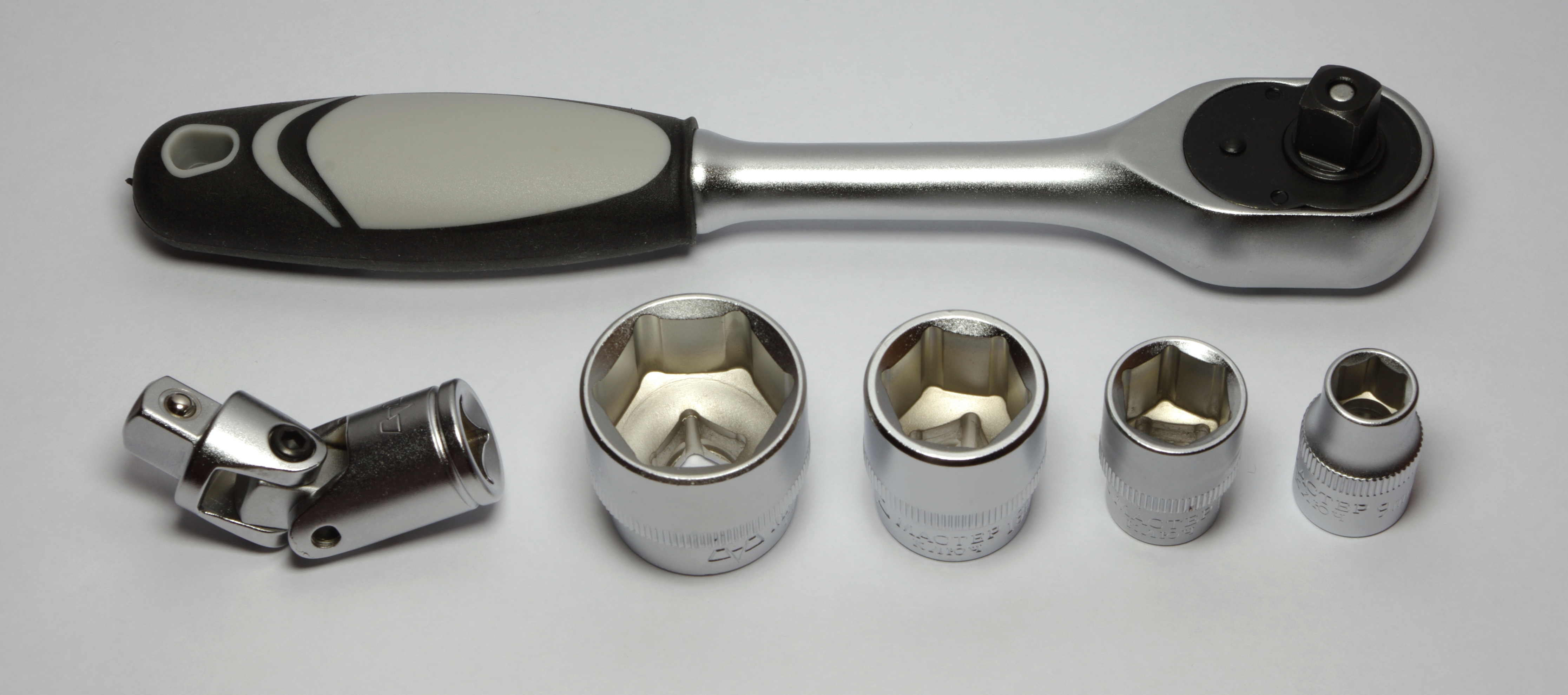
At its core, a socket wrench system comprises a drive handle and a set of sockets. The handle, often featuring a ratcheting mechanism, has a square drive that engages with a corresponding square recess on the socket. When the handle is moved, the ratcheting mechanism allows the drive to turn the socket in one direction while disengaging in the other, enabling continuous rotation of the fastener without lifting the tool. Sockets themselves are typically hexagonal (six-sided) to provide a secure grip on nuts and bolts, minimizing the risk of slippage and damage. They come in various depths and sizes, often measured in imperial (inches) or metric (millimeters) units, and can be extended with extensions or universal joints for accessing difficult-to-reach fasteners. Power-driven versions, like pneumatic impact wrenches, use compressed air to deliver rapid, high-torque impacts, while hydraulic torque wrenches employ fluid pressure for precise, controlled tightening.
📊 Key Facts & Numbers
Globally, the market for hand tools, including socket wrenches, is substantial. The sheer scale of manufacturing involved is highlighted by the global production of steel for tools, including socket wrenches, which exceeds 1.8 million metric tons per year.
👥 Key People & Organizations
While no single inventor is solely credited with the modern socket wrench, figures like J.H. Holland and George A. Williams are recognized for their contributions to the ratcheting mechanism. Major tool manufacturers have been instrumental in its development and proliferation. Snap-on, founded in 1920, became synonymous with high-quality professional mechanic's tools, including extensive socket sets. Craftsman, a brand historically associated with Sears, made socket wrenches accessible to a broader consumer market for decades. Williams Industrial Brands (formerly part of Cooper Industries) has also been a significant player, producing tools since the early 20th century. Today, companies like Stanley Black & Decker (owner of brands like DeWalt) and Empire Tools continue to innovate in the power tool and hand tool sectors.
🌍 Cultural Impact & Influence
The socket wrench has profoundly shaped modern manufacturing and repair. Its efficiency enabled the mass production of automobiles and machinery, making complex mechanical devices accessible to the public. In automotive repair, the socket wrench is arguably the most frequently used tool, allowing mechanics to service engines, transmissions, and chassis with speed and precision. Its influence extends to aerospace, where specialized, high-torque socket wrenches are critical for aircraft assembly and maintenance. The tool's ubiquity in DIY culture, popularized through countless YouTube tutorials and automotive magazines, has empowered individuals to perform their own maintenance, fostering a culture of mechanical self-reliance. The very concept of modularity in toolsets, where one handle serves many purposes, is a testament to the socket wrench's design philosophy.
⚡ Current State & Latest Developments
The current state of socket wrenches sees a continued integration of advanced materials and ergonomic designs. Manufacturers are increasingly using high-strength alloys like chrome-vanadium steel for enhanced durability and corrosion resistance. The trend towards cordless power tools is also impacting the socket wrench market, with more powerful and lighter cordless impact wrenches becoming standard in professional settings. Innovations include digital torque measurement integrated into handles, providing real-time feedback for precision tightening, and specialized socket designs for unique fastener types like tamper-resistant fasteners. The rise of 3D printing also presents potential for custom socket designs for highly specialized applications, though mass production still relies on traditional forging and machining.
🤔 Controversies & Debates
One persistent debate revolves around the standardization of drive sizes. While ISO and ANSI have established common drive size standards, minor variations can exist between manufacturers, sometimes leading to compatibility issues, especially with older tools. Another point of contention is the perceived quality difference between professional-grade tools from brands like Snap-on and more budget-friendly options. Critics argue that while cheaper tools may suffice for occasional use, they lack the durability and precision required for heavy professional workloads, potentially leading to stripped fasteners or tool failure. The environmental impact of tool manufacturing, particularly the energy-intensive processes for metal forging and plating, also raises concerns among sustainability advocates.
🔮 Future Outlook & Predictions
The future of socket wrenches likely involves greater automation and smart technology integration. We can anticipate more sophisticated smart tools that communicate with diagnostic systems, automatically recording torque values and fastener status. The development of advanced materials, perhaps composites or novel metal alloys, could lead to lighter, stronger, and more corrosion-resistant sockets and handles. As manufacturing processes evolve, robotics will play an increasing role in producing these tools with even greater precision. Furthermore, the demand for specialized tools for emerging technologies, such as electric vehicles with unique battery housing fasteners or advanced aerospace components, will drive the creation of new socket designs and drive systems. The fundamental utility of the socket wrench, however, is unlikely to diminish.
💡 Practical Applications
Socket wrenches are indispensable in numerous practical applications. In automotive repair, they are used for everything from changing oil filters and spark plugs to rebuilding engines and suspension systems. Construction crews rely on them for assembling structural components, installing fixtures, and performing maintenance on heavy machinery. In industrial settings, they are crucial for maintaining manufacturing equipment, pipelines, and power generation systems. Homeowners use them for assembling furniture, repairing appliances, and general household maintenance. Specialized applications include aerospace engineering, where precision and reliability are paramount, and even in fields like marine mechanics for working on boat engines and systems. The versatility of interchangeable sockets allows them to adapt to virtually any bolted or nutted connection.
Key Facts
- Category
- technology
- Type
- topic